The useful part first
Key takeaways
- Several slow or backed-up fixtures often point to a shared line, not just one drain.
- Rodding is best when the goal is to clear an accessible blockage, not to prove pipe condition.
- City utility records can help separate public-system questions from private-line work.
- If wastewater is returning, stop using water until the line is checked.
A common mistake is treating every backup like a simple sink clog. A toilet that rises, a basement floor drain that overflows, or several fixtures that slow down at once can point to a shared sewer line instead of one bad trap.
In West Chicago, the City’s utilities resource helps identify the right public-system contact when the question is whether a problem sits on the public side or your property side. That matters because the right next call depends on where the issue is actually happening, not just where the water shows up.
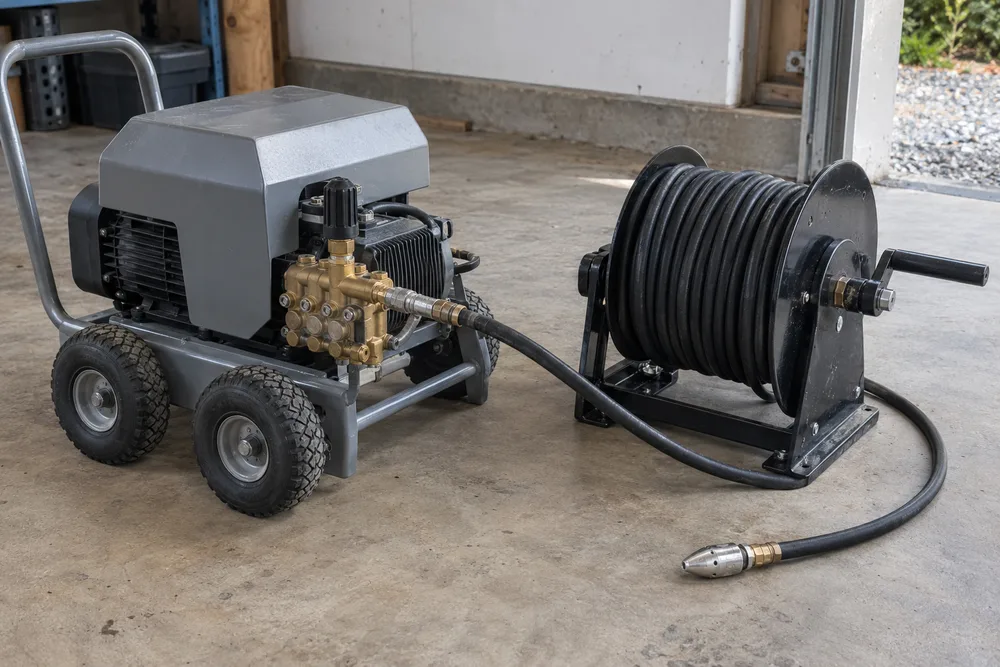
Sewer rodding is a mechanical clearing method used to break through soft buildup, wipes, paper masses, and some root-related blockages in accessible lines. It is not the same thing as diagnosing pipe damage, and it does not fix every recurring clog.
If you’re trying to decide what to request, start with the symptoms you can see, then the access points available, then the likely scope. If the backup is active, pause laundry, sinks, toilets, and showers, and do not run fixtures to recreate the problem.
What sewer rodding does, and what it does not
Sewer rodding uses flexible mechanical equipment to work through an obstruction in the sewer line. It is commonly used when the line is full of paper, wipes, grease buildup, or roots that have narrowed the passage. The goal is to reopen flow through the pipe so wastewater can move again.
It is a clearing service, not a guessing service. A contractor still needs the symptoms, access, and visible conditions to decide whether rodding makes sense before work begins.
It does not automatically confirm the pipe is intact. If the line clears but the problem keeps returning, the next conversation may involve inspection, not another round of the same clearing method.
It can only work where the line is reachable. If there is no usable access point, that changes the approach and may change what can be done on site.
- Used for shared-line blockages and accessible main sewer clogs
- May clear roots, paper, wipes, grease, and soft sludge
- Does not replace a camera inspection when pipe condition is still uncertain
- Requires enough access to reach the problem area
How symptoms shape the request
A toilet that bubbles when a sink drains, or a basement floor drain that backs up after another fixture is used, tells the contractor more than a vague report of a “slow drain.” Those details help separate a fixture problem from a main-line issue. If you want a deeper symptom comparison, the guide on single fixture versus main sewer blockage breaks down the difference in practical terms.
What happens when you ask for sewer rodding
The conversation usually starts with the fixture behavior, how many drains are affected, and whether the backup is active now or happened earlier. Expect questions about the lowest fixtures in the home, any recent plumbing work, and whether there is a cleanout or other access point already available.
The contractor is trying to match the service to the line, not sell a random method. If the line sounds like a simple mechanical blockage, rodding may be the first step. If the symptoms suggest a deeper issue, the contractor may recommend inspection after the line is opened.
For example, suppose a homeowner notices the basement floor drain gurgling after the washer drains, then water starts rising in the tub. That pattern suggests more than a single fixture clog, so the conversation should shift to the shared line, access, and whether immediate clearing is appropriate before any further water use.
If the line can be opened, the next step is usually to confirm that flow is restored and talk through what the symptoms suggest about next steps. If the line cannot be cleared fully, you may be advised to consider inspection or a different method rather than forcing the same approach repeatedly.
- Expect questions about which fixtures are affected
- Describe whether the problem is ongoing or already cleared
- Be ready to point out any cleanout or other access location
- If wastewater is backing up, do not keep running fixtures to test it
What to mention first
Start with the most useful facts: which drains are involved, what happened first, and whether any fixture makes the problem worse. If you’ve already noticed a strong sewer odor or repeated returns after prior cleaning, say that up front. Those details help the contractor decide whether a straight clearing visit is enough or whether another service should be paired with it.
Water backing up now?
Pause water use and call. Emergency calls are accepted 24/7.
When rodding is a good fit, and when it is not
Rodding is a good fit when the likely issue is a blockage inside an accessible line and the goal is to restore flow quickly. It is often the practical first move when wastewater is not moving through the main sewer line the way it should.
It fits blockage problems better than pipe-condition problems. If the line may be broken, separated, or heavily offset, clearing alone can help for a moment without solving the root cause.
It is not the same as hydro jetting. Mechanical rodding and high-pressure water cleaning can both clear lines, but they are used for different conditions and levels of buildup. If you want to compare them, the rodding, snaking, and hydro jetting guide explains the tradeoffs without turning every clog into the same job.
A camera inspection becomes more useful when the clog returns. If the line clears and then repeats, that is a clue to gather more evidence before repeating the exact same service.
If you are weighing service options for an older line or a line with repeated buildup, the condition of the pipe matters as much as the blockage itself. A contractor may suggest inspection first or after clearing depending on what is visible and reachable at the time.
- Good fit: accessible clog, need to restore flow
- Less certain fit: recurring problem after prior clearing
- Different from inspection, which shows condition rather than clearing flow
- May be followed by camera work if the cause stays unclear
How the line condition changes the plan
A line that clears cleanly and stays open tells a different story from one that only partially opens or backs up again the same day. That is why the first visit should focus on getting the water moving and then deciding whether more information is needed.
West Chicago utility context for public-versus-private questions
West Chicago’s utilities resource points residents toward the City Public Works side and the property utility records when they need to identify the right public-system contact. That is useful when a backup may involve more than the private house line, because the reporting path can depend on where the issue sits.
Do not assume a nearby town uses the same collection-system owner or reporting process. Even if two communities share a treatment relationship, the contact path can still differ.
If the symptoms suggest the public sewer may be involved, that city information can help you avoid reporting the same issue to the wrong place. If the problem is clearly on the property side, the service request stays focused on clearing and evaluating the private line.
For general understanding of how an inquiry is routed to an independent contractor, the referral process overview explains the handoff without mixing it up with the actual work on site.
- Use city utility records when public-system responsibility is unclear
- Property-side work still needs a service request for the private line
- A nearby municipality’s process may not match West Chicago’s
- Utility information helps direct the first call, not diagnose the clog
When utility information matters most
It matters most when the backup reaches multiple fixtures, appears after heavy system use, or seems broader than one drain. In those situations, the question is often not just how to clear the line, but which side of the system needs attention.
Access, preparation, and safe next steps
If you already know where the sewer cleanout is, mention it when you call. If you do not know, that is still fine. The contractor can ask follow-up questions about the basement, exterior wall, or other likely access points and decide what can be reached safely.
Do not open a pressurized or backed-up cleanout yourself. If wastewater is already coming up, that can create a mess and add risk instead of solving the problem.
Clear a little space around the access area if you can do so without touching contaminated water. If the issue is active, keep children and pets away from the backup area and avoid using fixtures until the line has been checked.
If you are unsure whether the problem is a main sewer issue or a fixture problem, the symptom-based guide on gurgling drains and toilets can help you describe what you’re seeing without making a remote diagnosis.
- Share any known cleanout location
- Do not force or open a backed-up cleanout
- Keep water use paused during an active backup
- Mention gurgling, odors, and cross-fixture symptoms
What not to do while waiting
If wastewater is backing up, don’t flush again, run the dishwasher, or start another laundry load to see what happens. That only adds more water to a line that has already shown it can’t move flow normally.
Questions homeowners ask before booking
A good sewer rodding request is specific enough to describe the problem but not so narrow that it rules out the right fix before anyone sees the line. The questions below are the ones that most often help a homeowner decide what to say first.
Common decision points
If the clog is affecting a single fixture and the rest of the house works normally, the request may belong with a fixture drain service instead. If several drains are affected or wastewater is rising in the lowest level, the shared line becomes more likely. If you already had the line cleaned recently and it clogged again, mention that clearly because recurrence changes the conversation.
Quick comparison of common next steps
| Situation | What it usually means | Common next step |
|---|---|---|
| One sink or tub is slow, the rest are normal | Likely fixture-level blockage | Fixture drain cleaning |
| Several fixtures are slow or backing up | Possible shared-line obstruction | Sewer rodding or related main-line service |
| Blockage returns after clearing | Possible recurring buildup or pipe issue | Inspection after clearing |
| You need to know whether it is public or private | Responsibility is unclear | Check City utility resources and property records |
Questions homeowners ask
How do I know if I need sewer rodding instead of sink cleaning?
If the problem stays with one fixture, it often points to that branch line. If multiple fixtures slow down, or a lower-level drain backs up when another fixture is used, the shared sewer line is more likely. Those symptoms make rodding a more relevant first request.
Can rodding clear roots?
It can sometimes clear root intrusion enough to reopen flow, but clearing roots is not the same as fixing the opening where they entered. If the problem keeps coming back, a camera inspection helps show whether roots, joint movement, or another issue is still present.
What should I do if wastewater is backing up right now?
Stop using water right away. Do not flush toilets, run sinks, or start appliances that discharge water. Tell the contractor that the backup is active and describe which fixtures are affected.
Do I need to know where the cleanout is before I call?
No. It helps if you do, but the contractor can ask questions and decide whether there is a usable access point. If you do know the location, mention it so the work can be planned more efficiently.
When should I ask about inspection instead of another cleaning?
If the line clears and then clogs again soon, or if the flow comes back only partially, inspection becomes more useful. That shifts the focus from simply opening the line to learning why it keeps closing up.
Local resources
Use these official resources for municipal or utility information. They are separate from Plumbers 911.